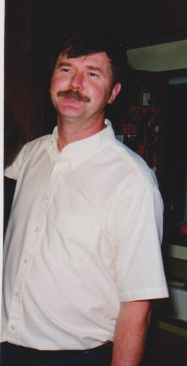
Steve Kohn was born in South Dakota as the oldest of four children to Lois and Paul Kohn. His siblings were: Robert, Linda, and Sandra. The standing joke in the family was that Steve was “born an old man” - even from an early age he displayed responsibility and dedication beyond his years.
The family moved to south Seattle when Steve was nine, with Paul working as a mechanic and Lois making wetsuits at a local dive suit manufacturer—Harvey’s Wetsuits. Steve attended Chief Sealth high school where he played basketball and football. When he was sixteen years old he started working at Harvey’s Dive shop which was located in the Top Hat area of Burien.
Harvey’s was a full service dive store which sold dive supplies, taught scuba lessons, rented dive equipment, repaired scuba gear, and filled scuba tanks. Steve, being preternaturally mature, proved a quick study and after learning the business soon found himself managing the dive shop by the time he graduated high school.
In 1966 Steve became one of the very first National Association of Skin Diving Schools (N.A.S.D.S.), instructor #30, when he turned 18 and immediately afterwards he began to teach people how to scuba dive, something he continued to do for over three decades.
A year later, in 1967, Steve became an instructor for the National Association of Underwater Instructors (N.A.U.I.) which was the toughest teaching certificate to earn. Steve was instructor #1247). Teaching scuba requires careful attention to students, solid water skills, and thoughtful planning, attributes that Steve became known for.
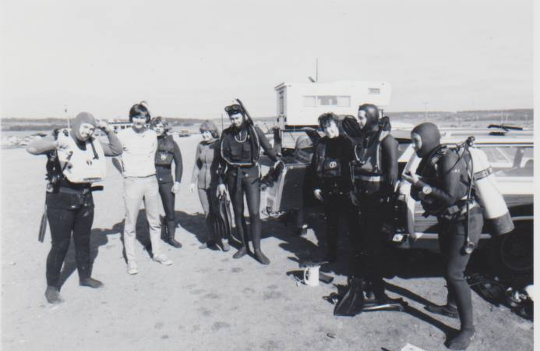
Steve Kohn with basic class at Keystone Jetty, 1972
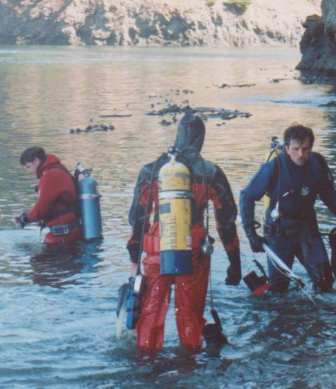
One of Steve’s favorite dive sites was right beneath the Deception Pass bridge. The narrow pass which divides Whidbey and Fidalgo islands is packed with marine life due to the strong currents which reach 8 knots during the tidal exchanges. The site was considered too dangerous to explore by the general public, however, Steve and his dive buddies pioneered diving all around the area.
Steve Kohn (left) entering Deception Pass, 1971
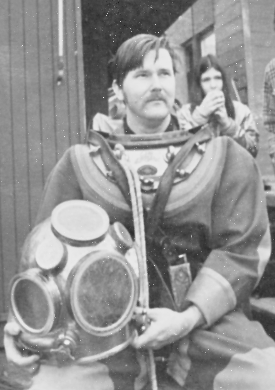
In 1969 Steve attended the new hard-hat school of commercial diving which had just started operations at Redondo, south of Seattle. Set up by Highline Community College as a two year program which trained divers in all sorts of professional gear: from old copper hard-hats and new Kirby Morgan fiberglass-hats, to diving bells, mixed gases, decompression chamber operation, underwater welding, pipe fitting, engine repair, etc. The class was taught by a former English commercial diver, Peter Williams, and was the most extensive such class taught in the world. Graduates received an associate degree in Undersea Engineering. Steve graduated at the top of his class.
In 1970 the Harvey’s dive shop was purchased by a nationwide chain of dive stores based in New England. Steve was retained as manager by New England Divers who built a huge new dive store with indoor swimming pool just a block south of Harvey’s location. This new operation was the largest dive facility on the west coast and thrived under Steve’s management.
When the Vietnam war was ongoing, Steve, like many others, received a “Greetings from the president” letter. He decided to join rather than be drafted and served his military time at Fort Lewis, eventually leaving in 1973 with an E5 rating. He enjoyed playing linebacker for his army unit. After his discharge, he continued to serve in the National Guard, part of the 50th General Hospital Reserve Unit at Fort Lawton for another twelve years.
Once he was out of the National Guard, Steve resumed teaching scuba, while also picking up other scuba teaching associations and a few years later also joined the Professional Association of Diving Instructors (P.A.D.I.) where he issued #6743.
Thus Steve had been issued scuba instructor tickets by the three largest scuba teaching agencies.
During this time, Steve not only taught beginning scuba classes in the evenings and weekends but joined with his younger partner, Eric Morris, in co-teaching the first of eight Divemaster classes (1973-1980), each of which lasted over the entire summer. The twenty students in each class needed to do 25 dives in a variety of challenging diving conditions in Puget Sound; wreck diving, current diving, deep diving, Mark-V hard-hat dive, night diving, and a “living off the sea” weekend. Dive sites included: Neah Bay, Port Angeles, San Juan Islands, Deception Pass, and Tacoma Narrows. Students that finished the class were comparable to dive instructors in their ability to dive anywhere - and many did go on to become divemasters or instructors themselves.
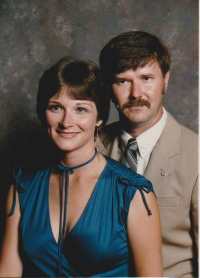
Steve met his future wife, Cindy Johnson, at the wedding of his younger brother, Robert (Cindy was one of the bridesmaids). Steve and Cindy stayed married for the next 35 years. Most folks teased Steve about batting over his average when he landed her. For thirty five years they were nearly inseparable and lived in their remodeled farmhouse in Burien.
Steve entered into a decade-long period of coaching baseball for the South Seattle Babe Ruth League, as well as becoming an umpire for many seasons. One of his great joys was mentoring young players and even decades later old players would run into him at various venues, coming forward to shake his hand and re-introduce themselves to him.
When Steve turned 52, he took an early retirement from King County Engineers and spent his hard earned free time working on a variety of projects; remodeling the farmhouse, setting up a vacation home he and Cindy had purchased in eastern Washington.
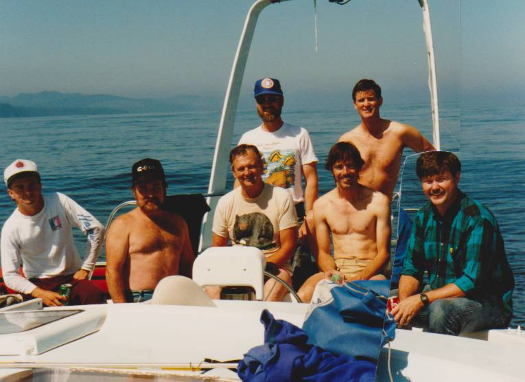
One of Steve’s favorite dives was on the wreck of the Diamond Knot, a 345 feet long freighter sunk in 135’ of depth near Port Angeles in 1947. The open ocean swells, the strong currents, the hazardous wreck (which was rapidly deteriorating), combined to make it a challenging dive. Steve made dozens and dozens of dives on this deep-water wreck and is shown here with a group of his dive buddies who spent the weekend diving off of a 45’ trimaran Chinook which took the divers out to the wreck.
In his later years a heart problem prevented Steve from diving, so he turned to shooting, becoming very involved with the National Rifle Association. He moved higher and higher up the ranks in that organization, holding teaching certificates in nearly everything the N.R.A. offers—including Chief Range Safety Officer, Instructor Councilor, and Instructor. He was also a certified instructor for the Washington State Dept. of Fish & Game’s Hunting Education courses.
It was on a visit to South Dakota that Steve suffered a stroke and was hospitalized, never quite able to rally from the complications.
Oddly, Steve died within one hundred miles of where he was born 69 years earlier.
He had taught over one thousand students how to dive without any accidents and was one of the most successful dive shop managers in the Pacific Northwest.
Steve Kohn, far right, out for a weekend of diving on the wreck of the Diamond Knot.
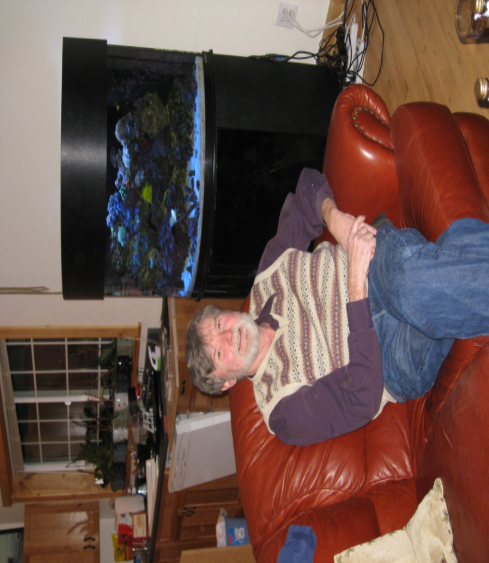
Steven Paul Kohn
1948—2018